










 |
| Gold V.1.3.1 signal Telegram Channel (English) |
How to Execute Precision Market Entry and Exit Strategies in Forex Carry Trades Amid Interest Rate Cycle Peaks and Sudden Risk-Off Reversals in 2026
2026-04-04 @ 00:08
Precision Market Entry and Exit Strategies for Forex Carry Trades in 2026
As global central banks navigate the complex landscape of interest rate cycle peaks in 2026, forex carry traders face unprecedented opportunities alongside heightened risks. This guide synthesizes institutional-grade strategies with actionable intelligence to help you execute carry trades with surgical precision, whether you’re capitalizing on yield differentials or defending against sudden market reversals.
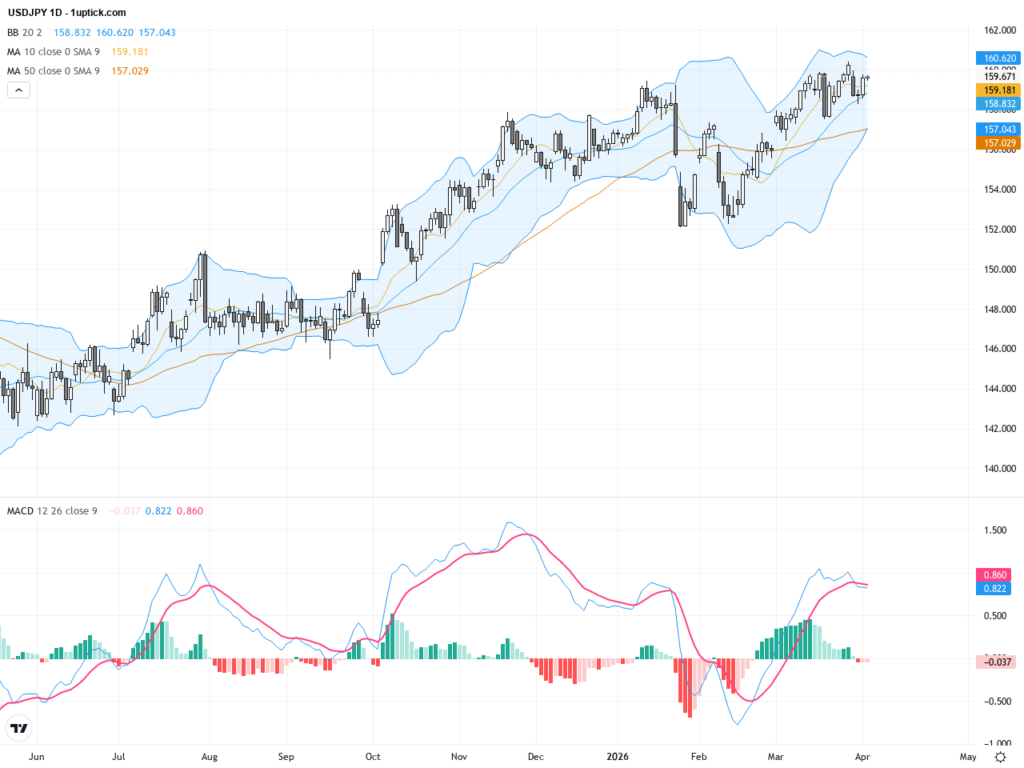
The carry trade landscape in 2026 presents a unique paradigm: with the Federal Reserve, ECB, and Bank of Japan at various stages of their monetary policy cycles, interest rate differentials have created compelling opportunities in pairs like USD/JPY, AUD/JPY, and emerging market currencies. However, the proximity to rate cycle peaks demands a more sophisticated approach than traditional buy-and-hold carry strategies.
Understanding the 2026 Carry Trade Environment
Before executing any carry trade strategy, traders must grasp the current macroeconomic context. Central bank forward guidance suggests we’re approaching terminal rates in several major economies, creating both opportunity and fragility in carry positions. Historical data indicates that carry trades perform optimally in stable rate environments but face severe drawdowns during policy pivots and risk-off episodes.
step_num: 1, heading: Conduct Comprehensive Interest Rate Differential Analysis
Begin by mapping the complete interest rate landscape across G10 and select emerging market currencies. Calculate real interest rate differentials by subtracting inflation expectations from nominal rates. In 2026, focus particularly on: (a) The Fed funds rate versus BoJ policy rate for USD/JPY positioning; (b) RBA cash rate versus major funding currencies for AUD crosses; (c) Select EM central banks maintaining restrictive policies like BRL and MXN. Utilize forward rate agreements (FRAs) and overnight index swaps (OIS) to gauge market expectations for rate changes over your intended holding period. A minimum 200 basis point real rate differential is recommended for carry trades in the current volatility regime.
step_num: 2, heading: Establish Multi-Factor Entry Criteria Framework
Develop a scoring system that integrates at least five confirmation factors before initiating positions: (1) Favorable interest rate differential exceeding your minimum threshold; (2) Positive momentum indicators on daily and weekly timeframes; (3) VIX and currency volatility indices below their 50-day moving averages; (4) Supportive risk sentiment measured through credit spreads and equity market breadth; (5) Technical support levels aligned with your entry price. Assign weights to each factor based on historical predictive accuracy. Only enter trades when your composite score exceeds 70% of maximum possible points.
step_num: 3, heading: Implement Dynamic Position Sizing Based on Volatility Regimes
Calculate position sizes using the Average True Range (ATR) volatility method adjusted for current market conditions. In 2026’s environment, apply the following framework: During low volatility regimes (VIX below 15), size positions to risk 1.5-2% of portfolio per trade. During moderate volatility (VIX 15-25), reduce to 0.75-1% risk. During elevated volatility (VIX above 25), either avoid new carry entries or limit risk to 0.5%. Additionally, implement correlation-adjusted sizing when running multiple carry positions to prevent concentration risk in correlated risk-on/risk-off moves.
step_num: 4, heading: Deploy Layered Entry Techniques for Optimal Positioning
Rather than entering full positions immediately, utilize a scaled entry approach: Initiate 30% of intended position size at your primary entry level when all criteria are met. Add 40% on a pullback to predetermined support levels or after positive economic data confirmation. Deploy the final 30% only after the position shows initial profit and maintains favorable momentum. This approach reduces average entry cost and provides flexibility to abort if conditions deteriorate. Set maximum timeframes for position building—if unable to establish full size within two weeks, reassess the trade thesis.
step_num: 5, heading: Construct Early Warning Systems for Risk-Off Detection
Build a real-time monitoring dashboard tracking leading indicators of risk-off reversals: Monitor JPY strength against multiple pairs as the primary safe-haven indicator. Track credit default swap spreads on investment-grade and high-yield indices. Observe gold/USD correlations and sudden precious metal demand. Watch emerging market bond fund flows for early redemption signals. Set automated alerts when any indicator breaches two standard deviations from its 20-day mean. In 2026, pay particular attention to geopolitical risk indices and central bank communication sentiment analysis, as policy pivots will likely trigger the most severe carry unwinds.
step_num: 6, heading: Execute Systematic Exit Protocols
Establish three distinct exit protocols activated under different scenarios: (A) Profit-taking exits: Scale out 25% of position at 1:1 reward-to-risk, 50% at 2:1, and let remaining 25% run with trailing stops. (B) Technical breakdown exits: Exit 100% of position immediately when price closes below key support levels on daily timeframes, regardless of profit/loss status. (C) Risk-off exits: Upon activation of early warning signals, immediately reduce position by 50% and tighten stops to breakeven on remainder. Do not wait for confirmation—carry trade reversals are notoriously swift, with historical data showing 60-70% of annual carry returns can evaporate within days during risk-off events.
step_num: 7, heading: Employ Options-Based Hedging Strategies
Protect carry positions using strategic options structures optimized for 2026 conditions: Purchase out-of-the-money put options on high-yielding currencies, targeting 3-month expirations with strikes 3-5% below current spot. Consider risk reversals that sell upside calls to finance downside protection, accepting capped profits for enhanced security. During periods of unusually low implied volatility, build options hedges more aggressively as protection is cheap. Calculate the breakeven impact—if hedge costs exceed 40% of expected carry income, either reduce position size or wait for better entry opportunities.
step_num: 8, heading: Conduct Post-Trade Analysis and Strategy Refinement
Maintain detailed trade journals documenting entry/exit rationale, market conditions, and outcomes. After each closed position, analyze: Was the interest rate differential sufficient to justify the risk taken? Did entry criteria accurately predict favorable conditions? How effective were exit protocols in protecting capital or capturing profits? Review losing trades specifically for lessons on improving risk-off detection. Quarterly, backtest your strategy against recent market data to ensure continued effectiveness as 2026 conditions evolve.
Insider Insight: Institutional Approaches to Carry Trade Management
Professional fund managers in 2026 are increasingly utilizing machine learning algorithms to detect regime changes before they become apparent in traditional indicators. These systems analyze central bank communication patterns, order flow data, and cross-asset correlations to generate probability-weighted scenarios. For retail and semi-professional traders, replicating this edge requires focusing on three key areas: First, develop expertise in reading central bank minutes and speeches for subtle policy shift signals. Second, monitor institutional positioning through COT reports and options market data. Third, build relationships with information sources who can provide early intelligence on major fund positioning changes. Remember that in carry trading, the crowd is your friend during accumulation but your enemy during liquidation—always maintain the ability to exit before the majority recognizes the shift.
Success in 2026’s carry trade environment ultimately depends on respecting the asymmetric risk profile inherent in these strategies. While carry trades offer consistent small gains during favorable periods, the potential for rapid, severe losses during risk-off events demands unwavering discipline in applying these entry and exit frameworks.