

 |
| Gold V.1.3.1 signal Telegram Channel (English) |
U.S. Renewable PPA Market Faces Post-July 4 Tax Credit Cliff with Prices Set to Soar 40–120%
2026-06-27 @ 13:02
Brace Yourself: July 4 Tax Credit Deadline Set to Spike Renewable PPA Prices
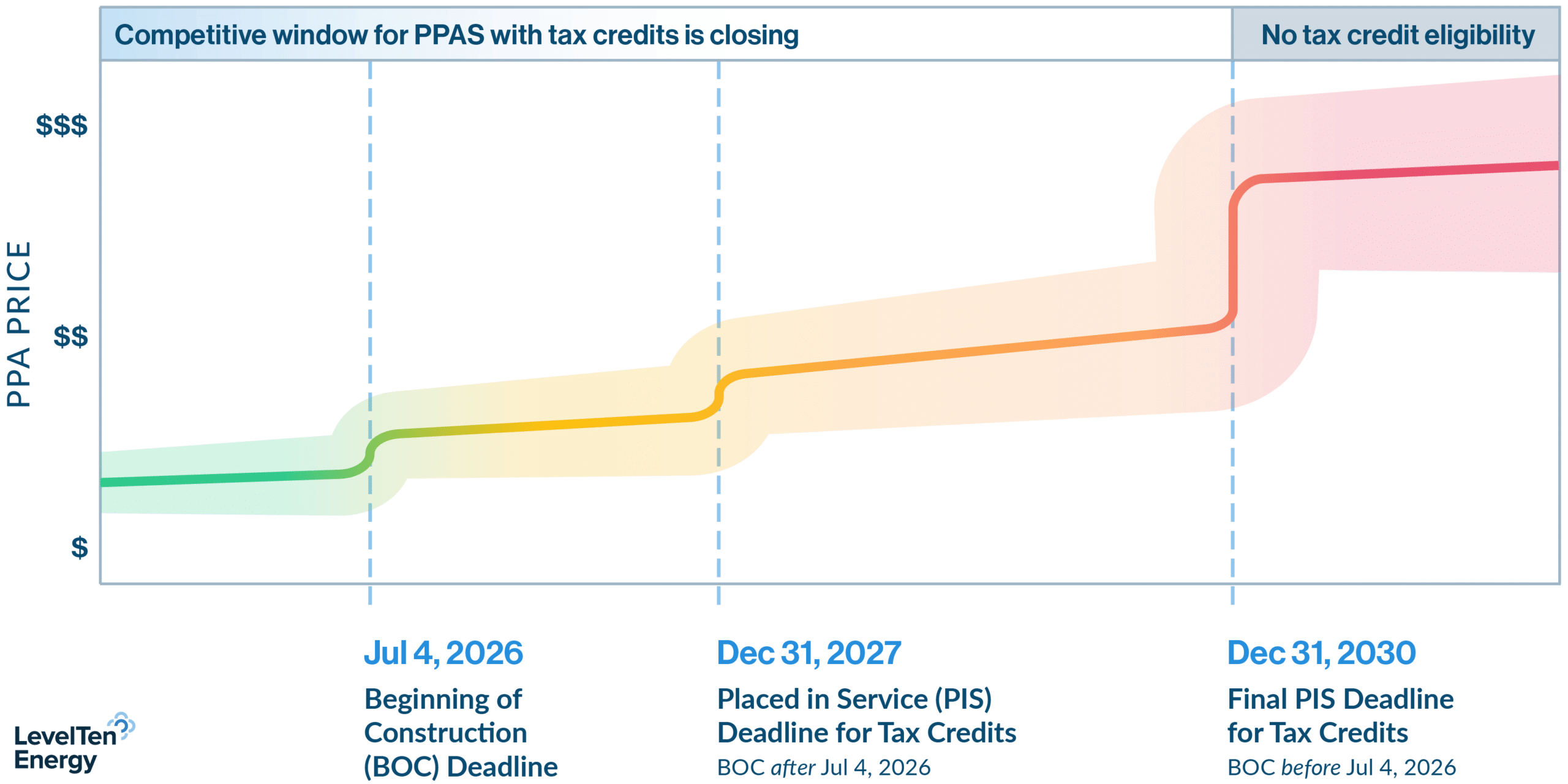
The U.S. renewable energy space has been buzzing intensely over the last two weeks—and all eyes are locked on July 4, 2026. That’s the critical “begin-construction” cut-off under the One Big Beautiful Bill Act (OBBBA), which decides which wind and solar projects get to tap into powerful federal clean energy tax credits.
Miss that deadline—or fail to commercialize by the end of 2027—and those projects lose access to much-needed incentives. LevelTen Energy’s latest reports highlight that post-deadline PPAs could see price hikes so steep, some Texas ERCOT projects may have to more than double their PPA prices to stay viable. We’re talking 40% to 120% price jumps—a serious shock to the market.
Already, over the past few weeks, wind and solar PPA prices on LevelTen’s platform have climbed around 4% compared to last year. Developers reacting to tax credit risks and rising costs have pushed bids higher by $2 to $8 per MWh. Without credits, solar PPA prices might need to climb $8 to $17.50/MWh just to keep investors happy—meaning prices could jump up to 120% in some cases.
What This Means for the Market
Developers and independent power producers (IPPs) who lock in their projects before the deadline gain bargaining power, capitalizing on tax credits to secure better deals. But those lagging behind face tougher economics and higher capital costs, especially small players who could struggle to secure financing.
For utilities and large corporations aiming for clean energy targets, competition is heating up. High-demand, constrained markets like ERCOT experience the sharpest price spikes, and contract delays could disrupt corporate renewables procurement plans. Regulatory hesitancy to pass higher energy costs to consumers could squeeze profits.
From a financial standpoint, the loss of predictable tax equity cash flows for post-deadline projects means lenders and investors will demand higher risk premiums. This tightening can render lightly contracted or merchant projects uneconomic, squeezing the pipeline of new clean energy buildout.
Latest Developments and Policy Landscape
LevelTen’s Q3 2025 wind price index climbed nearly 5% in the quarter and 14% year-over-year, underscoring a structural upward trend driven by tax credit expiration risk, cost inflation, and grid congestion.
Policy-wise, the OBBBA requirements have been cemented: projects must start construction by July 4, 2026, or be in service by the end of 2027 to claim the full 45-year investment or 48-year production tax credits, with no phasedown. A court recently reinstated the 5% safe harbor rule for beginning construction status, beneficial for many solar and storage projects, but the hard deadline remains unchanged.
Notably, new rules from 2026 exclude “specified foreign entities” from claiming key clean energy tax credits, impacting some foreign-backed developers and supply chains.
In response to this market squeeze, LevelTen has ramped up efforts to spotlight projects still eligible for tax credits, leading to a rush as buyers compete to secure these last few favorable contracts. Some buyers are paying premiums or accelerating procurement to avoid post-July 4 pricing shocks.
Looking Ahead: Navigating a Shifting Renewable Landscape
Before the deadline, expect PPA prices tied to qualifying projects to gradually climb, especially in hot markets like ERCOT and CAISO. After July 4, the market will test just how much lost tax value can be recouped through higher PPA prices without collapsing demand. The likely scenario is a significant repricing of new-build renewables over 2026–27.
Contract structures might evolve—with more virtual or hybrid PPAs, shorter terms, and stepped or indexed pricing paths—to share tax and policy risks between sellers and buyers and smooth out the tax cliff impact.
Policy remains a wildcard. Any further Treasury or IRS guidance on construction definitions, domestic content rules, or credit transferability could nudge PPA prices even higher. For now, OBBBA’s timelines hold firm, but industry watchers remain alert to any potential softening.
Importantly, large utilities and corporate buyers with firm net-zero and renewable mandates continue demanding clean power, suggesting robust underlying need for PPAs despite rising prices. This balancing act between cost pressures and decarbonization goals will shape the U.S. power and carbon strategy over the next couple of years.