Insightz

Insightz
Investment Strategies for 2025: Navigating Economic Shifts, AI Megatrends, and Market Risks

Investment Strategies for 2025: Navigating Economic Shifts, AI Megatrends, and Market Risks

Investment Strategies for 2025 focus on navigating a complex economic landscape shaped by steady but modest global growth, rising productivity driven by AI and automation, and evolving market risks. Economic growth in major regions like the US, Europe, and China is expected to be moderate, with central banks cautiously balancing inflation and interest rates to support a “soft landing” without triggering recessions. The accelerating adoption of AI and related technologies is key to boosting productivity, offering unique investment opportunities in growth equity and venture capital as innovation drives new industry tools and energy demands. Diversification and active management will be crucial to capture trends amid volatility, with market conditions favoring balanced portfolios that can adapt to changing policies, geopolitical uncertainties, and shifts in consumer behavior. Investors should prioritize sectors poised for transformation through technology while managing exposures to inflation and monetary policy risks, aiming for resilience and growth in a year of dynamic economic shifts.

What’s Really Driving Stock Market Volatility and How It Affects Your Investments

What’s Really Driving Stock Market Volatility and How It Affects Your Investments

Stock market volatility in 2025 is being driven primarily by escalating tariff uncertainties, elevated valuations in mega-cap tech stocks, and concerns over economic growth and inflation. Recent aggressive trade policies, including sweeping tariffs on major trading partners, have stirred investor anxiety, leading to sharp market fluctuations and panic selling across global markets. This volatility impacts consumer and investor confidence, causing shifts in investment behavior and bond markets. Although tariffs may increase short-term market disruptions and inflation pressures, some are expected to be temporary or moderated through negotiations. Investors navigating this turbulent environment should focus on long-term strategies amid ongoing economic and geopolitical challenges such as debt ceiling debates, international conflicts, and fiscal policies influencing inflation and interest rates.

Hong Kong Financial Markets 2025: Explosive Growth, Record IPOs, and Market Innovation

Hong Kong Financial Markets 2025: Explosive Growth, Record IPOs, and Market Innovation

Hong Kong’s financial markets are set for explosive growth in 2025, driven by record IPO activity, strong GDP expansion, and significant innovation in digital assets and wealth management. The economy is projected to grow steadily between 2% and 3%, supported by resilient exports, rising domestic demand, and a buoyant stock market. Hong Kong is rapidly advancing as a global leader in wealth management, bolstered by digital asset adoption where banks now offer tokenised securities and custodial services, with transaction volumes soaring. This dynamic market environment fosters fresh opportunities for investors and positions Hong Kong as a premier financial hub embracing market innovation, sustainable investing, and continued economic resilience throughout 2025.

Why Fed Rate Cuts Don’t Always Lower Mortgage Rates: What Homebuyers Need to Know

Why Fed Rate Cuts Don’t Always Lower Mortgage Rates: What Homebuyers Need to Know

Understanding why Federal Reserve rate cuts don’t always lead to lower mortgage rates is essential for homebuyers navigating today’s market. While the Fed influences short-term interest rates, mortgage rates—especially for 30-year fixed loans—are primarily determined by long-term bond market dynamics, inflation expectations, and economic outlooks. As a result, even when the Fed cuts its benchmark rate, mortgage rates can remain steady or even rise due to factors like investor demand for mortgage-backed securities and inflation concerns. Homebuyers should recognize that mortgage rates respond to a complex mix of signals beyond Fed decisions, including market anticipation of future policy moves and broader economic conditions. Being aware of this helps buyers better plan their financing strategy in an environment where Fed rate cuts don’t guarantee cheaper home loans.

Hong Kong Residential Property Market 2025: Recovery Driven by Policy Incentives and Developer Discounts Amid Ongoing Risks

Hong Kong Residential Property Market 2025: Recovery Driven by Policy Incentives and Developer Discounts Amid Ongoing Risks

Hong Kong’s residential property market is showing signs of recovery in 2025, driven by government policy incentives, attractive developer discounts, and easing mortgage rates. Transaction volumes in both primary and secondary markets have surged, supported by the gradual decline in the Hong Kong Interbank Offered Rate (HIBOR) which lowers borrowing costs for homebuyers and investors alike. New project launches and competitive pricing strategies by developers have stimulated strong sales momentum, with transaction numbers rising significantly quarter-on-quarter. Despite chronic housing shortages and ongoing macroeconomic uncertainties, improved affordability and promising supply-side reforms provide a bullish outlook for long-term investors. Additionally, rising residential construction completions and better rental yields are attracting renewed interest across the market. However, caution remains as global economic risks and evolving interest rate conditions could impact sustained growth.

U.S. Economy in 2025: Why Slower Growth Signals Sustainable and Balanced Expansion

U.S. Economy in 2025: Why Slower Growth Signals Sustainable and Balanced Expansion

U.S. economic growth in 2025 is expected to slow to around 1.4-1.5%, reflecting a transition toward a more sustainable and balanced expansion. Despite this moderation, the economy remains resilient with stronger consumer spending and a rebound in GDP growth in the second quarter after a slight contraction earlier in the year. Labor market activity shows signs of softening, with slower job gains and a modest rise in unemployment projected into early 2026. Key factors influencing the outlook include tariff impacts, cautious business investment growth, and persistent inflation pressures above target. This measured pace of growth signals a shift from rapid expansion toward stability, supported by monetary policy adjustments and ongoing efforts to manage uncertainty in global trade and financial conditions.

Eli Lilly’s GLP-1 Drug Price Hike in the UK: What It Means for Global Pharma and U.S. Drug Pricing Debates

Eli Lilly’s GLP-1 Drug Price Hike in the UK: What It Means for Global Pharma and U.S. Drug Pricing Debates

Eli Lilly is increasing the UK list price of its GLP-1 drug Mounjaro by up to 170% starting September 2025, significantly impacting private patients who pay out-of-pocket for this weight loss and diabetes treatment. While NHS patients will not be affected due to separate pricing agreements, private users will face higher costs, especially for higher doses. This price adjustment aligns UK prices more closely with those in Europe and other markets. As a result, patients and providers are exploring alternatives like Wegovy, which may offer comparable effectiveness with potentially more stable pricing. This shift highlights broader concerns about global pharmaceutical pricing strategies and ongoing debates about drug affordability in the U.S. and worldwide.

Opendoor CEO Carrie Wheeler Resigns Amid Activist Pressure as Stock Surges Over 100% in Volatile Real Estate Tech Shakeup

Opendoor CEO Carrie Wheeler Resigns Amid Activist Pressure as Stock Surges Over 100% in Volatile Real Estate Tech Shakeup

Opendoor CEO Carrie Wheeler has resigned amid intense activist investor pressure, marking a significant leadership change in the real estate tech sector. Her departure coincides with a surge in Opendoor’s stock price, which has risen more than 100% this year due to renewed investor interest and a recent meme stock rally. Wheeler initiated the executive transition earlier in 2025 and will stay on as an advisor through year-end. Meanwhile, Chief Technology & Product Officer Shrisha Radhakrishna assumes the role of interim president as Opendoor conducts a search for a permanent CEO. This leadership shift occurs as Opendoor navigates challenges in a volatile real estate market, having moved from billion-dollar losses to achieving positive EBITDA under Wheeler’s tenure. The company is poised for new direction with increased investor confidence fueling volatility and growth in its stock value.

Top Retail Earnings to Watch Next Week: Home Depot, Lowe’s, Target, BJ’s, and Walmart Outlook Amid Inflation and Housing Market Challenges

Top Retail Earnings to Watch Next Week: Home Depot, Lowe’s, Target, BJ’s, and Walmart Outlook Amid Inflation and Housing Market Challenges

Top retail earnings to watch next week include major players like Home Depot, Lowe’s, Target, BJ’s, and Walmart as they navigate ongoing inflation and housing market challenges. Investors should focus on these companies’ financial results to gain insights into consumer spending trends amid economic pressures. Optimizing retail websites with targeted keywords, rich product descriptions, secure e-commerce features, and mobile-friendly design is essential to capture increased organic traffic and improve conversion rates. Incorporating structured data and enhancing user experience further boost search rankings, helping retailers maximize visibility and sales in a competitive market. With over three-quarters of ecommerce purchases beginning with a search, prioritizing SEO strategies such as fast loading times, quality content, and voice search optimization is critical for retail success.

U.S. Stock Market Defies Odds in August 2025: AI-Driven Mega Tech Rally, Rising Bond Yields, and Sector Risks to Watch

U.S. Stock Market Defies Odds in August 2025: AI-Driven Mega Tech Rally, Rising Bond Yields, and Sector Risks to Watch

U.S. stocks surged in August 2025, led by an AI-driven rally in mega tech companies despite rising bond yields and sector-specific risks. Discover how these market forces are shaping investment opportunities and challenges this month.

The Untold Rise of Meme Stocks: How Social Media Fuels Market Mania and Unpredictable Price Surges

The Untold Rise of Meme Stocks: How Social Media Fuels Market Mania and Unpredictable Price Surges

Discover the untold rise of meme stocks and how social media platforms like Reddit, Twitter, and TikTok have transformed stock market dynamics. Driven by viral trends, online communities, and collective investor action, meme stocks experience unpredictable price surges that often defy traditional fundamental analysis. This new wave of investing empowers retail traders to challenge Wall Street norms, using social media to coordinate massive buying efforts that impact stock prices beyond conventional valuations. The phenomenon continues evolving with fresh waves of meme stocks surfacing in 2024 and 2025, fueled by social momentum and rapid information sharing. Explore how this shift is reshaping market behavior, valuation models, and the future of investing.

Stocks Edge Higher Amid Fed Rate Cut Uncertainty and Economic Data Mixed Signals

Stocks Edge Higher Amid Fed Rate Cut Uncertainty and Economic Data Mixed Signals

Stocks edged higher amid mixed economic data and ongoing uncertainty over Federal Reserve interest rate decisions. Investors remain cautious as markets react to conflicting signals on inflation and economic growth, weighing the potential for future rate cuts against persistent inflation concerns. This market volatility highlights the delicate balance between economic indicators and Fed policy expectations, influencing stock performance. Stay informed on how these factors may impact your investments and market trends.

1 36 37 38 39 40 86
“US Dollar Volatility: How Political Uncertainty and Economic Data Surprises Are Impacting the Global Currency”
03Oct

“US Dollar Volatility: How Political Uncertainty and Economic Data Surprises Are Impacting the Global Currency”

**US Dollar Volatility: Navigating Political Uncertainty and Economic Shifts**

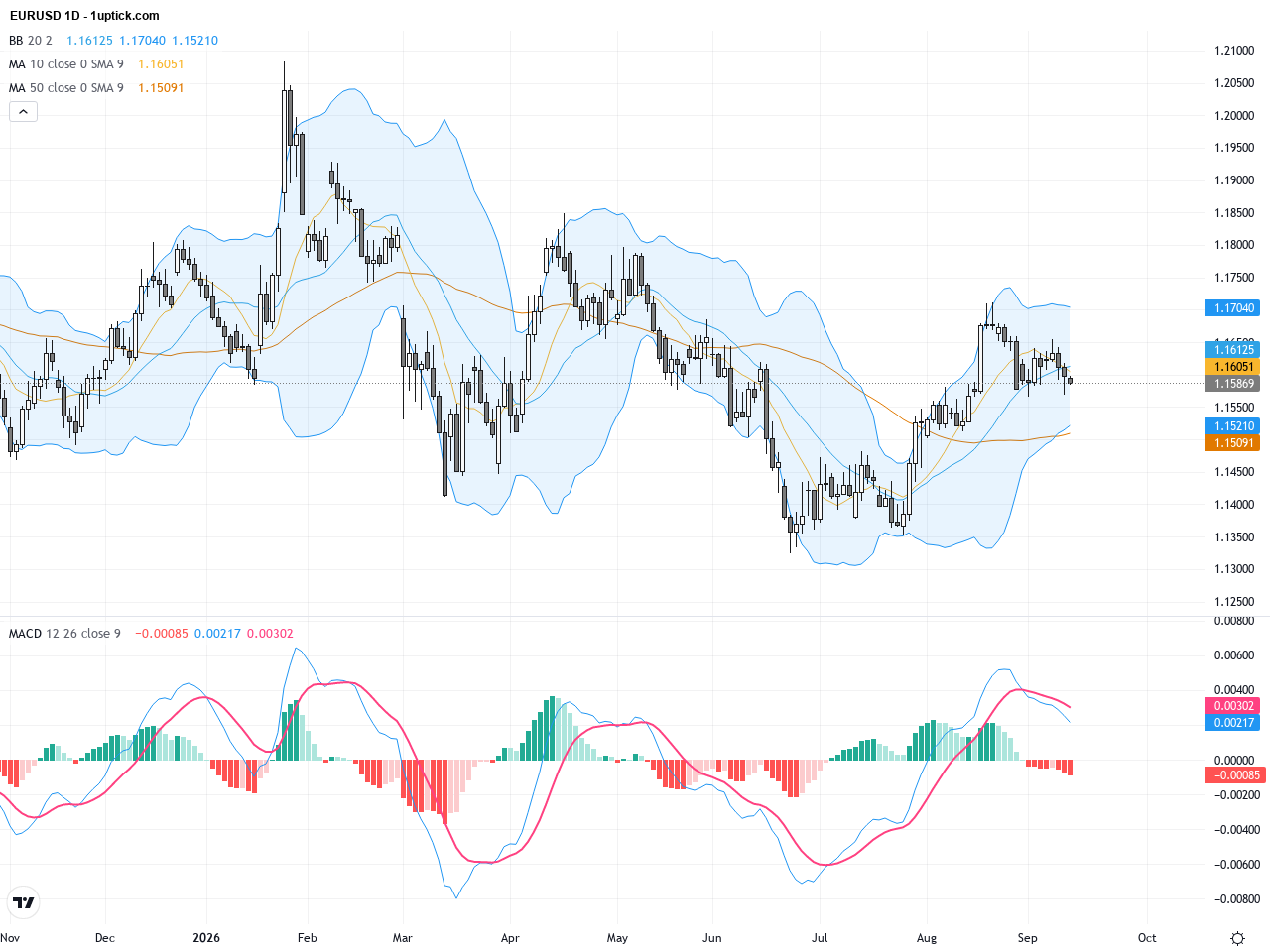
The US dollar has been experiencing significant volatility in recent times, influenced by political uncertainty and unexpected economic data. The dollar, traditionally seen as a safe-haven currency, has witnessed unprecedented behavior, particularly following major policy announcements. Tariffs and fiscal policies have played a crucial role in shaping the dollar’s trajectory, with investors increasingly questioning the stability of US financial assets.

The first half of 2025 saw a substantial decline in the dollar’s value, marking the largest drop in over 50 years. This downturn is attributed to various factors, including heightened tariff threats, growing fiscal deficits, and shifts in global economic dynamics. As the dollar weakens, it poses both challenges and opportunities for investors and businesses alike.

For investors, maintaining a diversified portfolio is crucial during these times. The depreciation of the dollar can make US assets less appealing to foreign investors, but it also presents opportunities for domestic exporters. Additionally, the rise in import prices could exacerbate inflationary pressures.

Understanding the complex interplay between political and economic factors is essential for navigating the current landscape of US dollar volatility. As the global economy continues to evolve, stakeholders must remain vigilant about potential future fluctuations in the currency market.

How U.S. Government Shutdowns Impact Markets and What Investors Need to Know
02Oct

How U.S. Government Shutdowns Impact Markets and What Investors Need to Know

**How U.S. Government Shutdowns Impact Markets: A Comprehensive Guide**

U.S. government shutdowns have significant implications for markets and investors. These events occur when Congress fails to pass necessary spending bills, leading to a halt in non-essential government services. Hundreds of thousands of federal workers are furloughed, and many government services, including national parks and nutrition assistance programs, are impacted. However, essential services like national security, emergency medical care, and law enforcement continue.

From an economic perspective, government shutdowns can dampen economic output, reduce consumer spending, and delay federal compensation. The effects on GDP are often temporary, with most lost output recovered once the government reopens. However, long-term consequences can affect small and mid-sized businesses and weaken the broader economy. Investors should be aware of these dynamics to make informed decisions during such periods. Shutting down the government can lead to inefficiencies, wasting taxpayer dollars and delaying new initiatives, which can have lasting impacts on the nation’s contracting partners and businesses.

To navigate these challenges, understanding the immediate and long-term implications of government shutdowns is crucial for both investors and policymakers.

**Keyword phrases for optimization:** U.S. government shutdowns, market impacts, investor insights, economic effects, government funding lapses.

**Meta description:** Discover how U.S. government shutdowns affect markets and what investors should know. Learn about the economic and service impacts to make informed decisions.

**Header tags:**
– **Impact on Services**: Government shutdowns impact various public services, including federal workers, national parks, and nutrition programs.
– **Economic Effects**: Shutdowns can reduce GDP, delay spending, and affect consumer spending among federal workers.
– **Investor Considerations**: Understanding the short and long-term market implications is key for investors during shutdowns.

U.S. Government Shutdown 2025: Impact on Treasury Yields, Federal Reserve Decisions, and Market Volatility
02Oct

U.S. Government Shutdown 2025: Impact on Treasury Yields, Federal Reserve Decisions, and Market Volatility

Here’s an SEO-optimized excerpt for your article:

“Discover how the 2025 U.S. Government Shutdown impacts Treasury Yields, Federal Reserve Decisions, and Market Volatility. Learn the economic implications and how these factors intertwine to shape financial markets.”

This excerpt is designed to be concise, informative, and keyword-friendly to enhance SEO and reader engagement.

U.S. Government Shutdown Drives Stock Market Downturn While Lithium Americas Shares Soar Amid EV Boom
02Oct

U.S. Government Shutdown Drives Stock Market Downturn While Lithium Americas Shares Soar Amid EV Boom

U.S. Government shutdown concerns are triggering a downturn in the stock market, creating uncertainty among investors. Meanwhile, shares of Lithium Americas are soaring, fueled by strong demand for electric vehicles (EVs) and the growing lithium market. This contrast highlights shifting investor focus from political risks to the booming EV sector, with Lithium Americas positioned to benefit significantly from the global transition to clean energy and electric mobility.

“Bitcoin’s Rise Amid Political Turmoil: Why Investors Are Turning to Crypto in Uncertain Times”
01Oct

“Bitcoin’s Rise Amid Political Turmoil: Why Investors Are Turning to Crypto in Uncertain Times”

Bitcoin is increasingly viewed as a safe-haven asset amid political turmoil and economic uncertainty, driving investor interest in cryptocurrency during times of instability. The ongoing U.S. government shutdown and heightened political polarization have intensified market volatility, prompting many investors to turn to Bitcoin as a digital hedge against traditional financial risks. Meanwhile, significant regulatory developments in 2025 are reshaping the U.S. crypto landscape, offering clearer frameworks that boost confidence in digital assets. As family offices and institutional investors adapt to geopolitical risks, Bitcoin and other cryptocurrencies are gaining prominence as strategic tools for portfolio diversification and risk management in uncertain times.

European Markets Rally as Healthcare Stocks Surge Amid U.S. Shutdown Uncertainty and Mixed Sector Performance
01Oct

European Markets Rally as Healthcare Stocks Surge Amid U.S. Shutdown Uncertainty and Mixed Sector Performance

European markets are rallying as healthcare stocks surge, driven by a new deal between the US government and Pfizer that eased pricing uncertainties for drugmakers. The STOXX Europe 600 index gained amid a mixed sector performance, with healthcare leading a notable 3.1% increase while technology and real estate sectors saw declines. Despite ongoing concerns about a potential US government shutdown affecting economic data releases, investor optimism has kept European stocks on an upward trajectory. Key pharmaceutical companies, including Novartis after FDA approval of a new treatment, also contributed to market gains. This positive momentum marks a strong close to September and reflects broader resilience in European equities amid global economic uncertainties.

1 36 37 38 39 40 171

1uptick Analytics @

Maximize your profit at ease

Risk Warning​

*Investment involves risk. You may use the information, strategies and trading signals on this website for academic and reference purposes at your own discretion. 1uptick cannot and does not guarantee that any current or future buy or sell comments and messages posted on this website/app will be profitable. Past performance is not necessarily indicative of future performance. It is impossible for 1uptick to make such guarantees and users should not make such assumptions. Readers should seek independent professional advice before executing a transaction. 1uptick will not solicit any subscribers or visitors to execute any transactions, and you are responsible for all executed transactions.

© 2022-25 – 1uptick Analytics all rights reserved.


Risk Warning​

*Investment involves risk. You may use the information, strategies and trading signals on this website for academic and reference purposes at your own discretion. 1uptick cannot and does not guarantee that any current or future buy or sell comments and messages posted on this website/app will be profitable. Past performance is not necessarily indicative of future performance. It is impossible for 1uptick to make such guarantees and users should not make such assumptions. Readers should seek independent professional advice before executing a transaction. 1uptick will not solicit any subscribers or visitors to execute any transactions, and you are responsible for all executed transactions.

© 1uptick Analytics all rights reserved.

Home
Analysis
Calendar
Tools
Signals