

 |
| Gold V.1.3.1 signal Telegram Channel (English) |
EURUSD Technical & Fundamental Analysis: ECB Rate Decision and Safe Haven Dollar Demand in Focus, July 22, 2026
2026-07-22 @ 09:01
Over the past 24 to 48 hours, the EUR/USD pair has seen a downward trend, dipping slightly below yesterday’s close of 1.14038. This movement was primarily driven by escalating tensions in the Middle East and rising oil prices, which boosted demand for safe-haven assets and strengthened the U.S. Dollar Index (DXY). Notably, WTI crude oil surged past the $84.00 mark, intensifying geopolitical risk concerns and fueling increased dollar buying pressure, putting the euro under strain.
Although recent upbeat ZEW surveys and the upcoming European Central Bank (ECB) interest rate decision provided some support to the euro, the ongoing Middle East conflict enhanced the dollar’s safe-haven appeal, limiting euro’s ability to rally and instead pushing it lower. For the average investor, this scenario mirrors how global uncertainty boosts demand for more secure assets like the U.S. dollar, causing the euro to weaken in comparison.
In summary, the last two days’ market action clearly illustrates the direct impact of Middle East geopolitical tensions on forex markets. Investors should closely monitor upcoming ECB policy moves and subsequent U.S. economic data releases to stay ahead of potential shifts in the EUR/USD outlook.
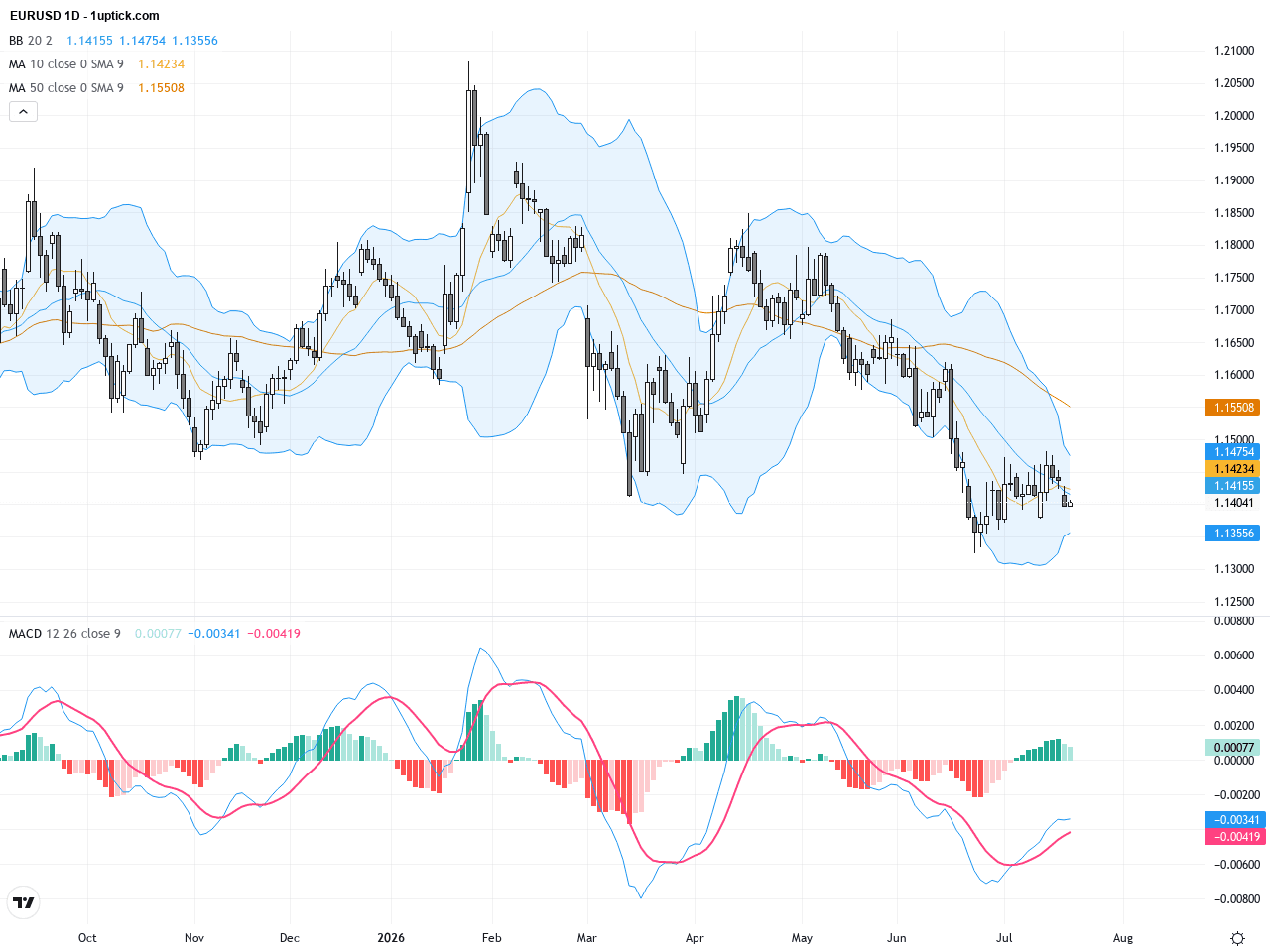
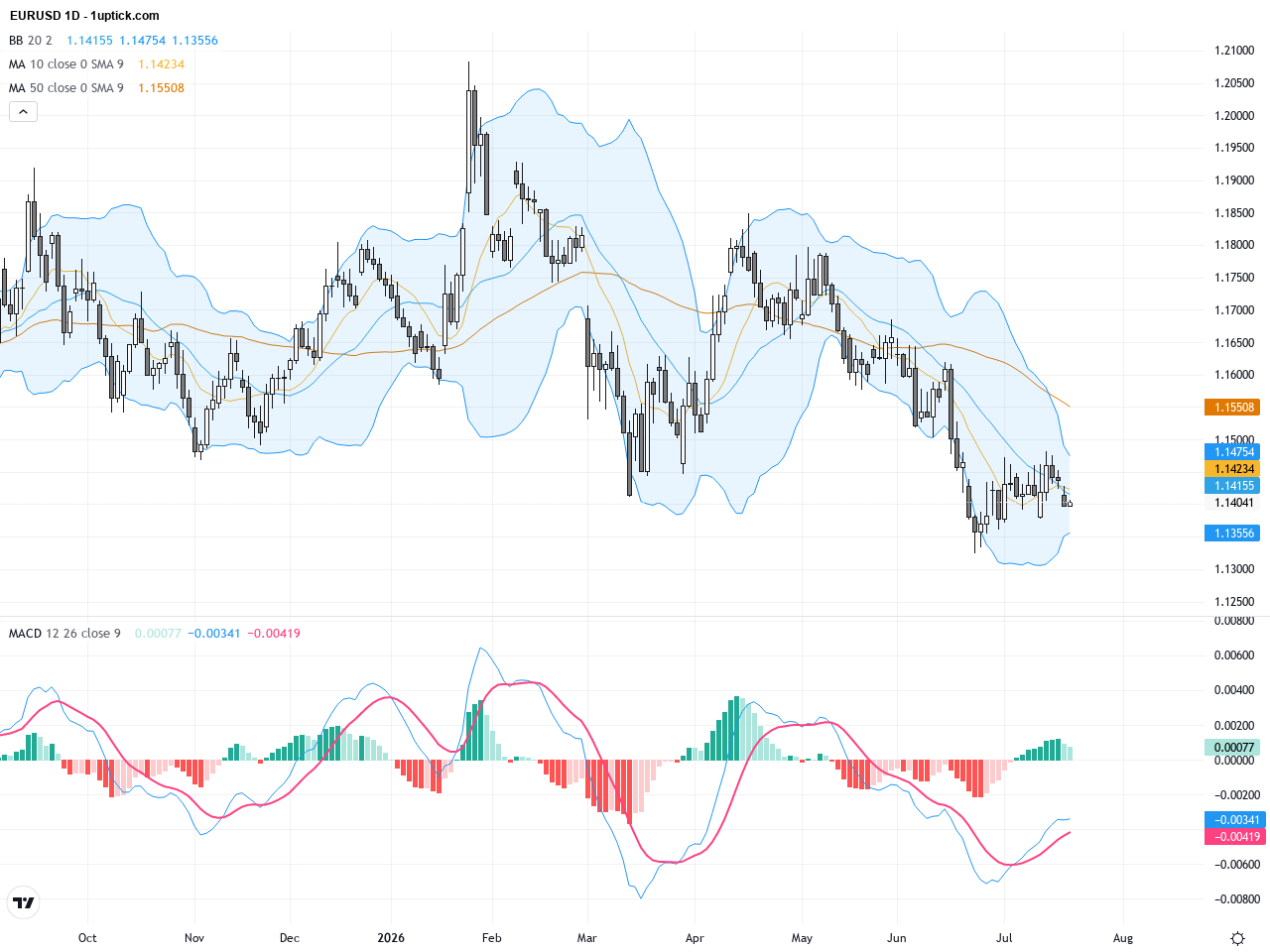
The daily chart shows EURUSD falling from the yearly high of 1.20236 to about the 1.14 support area. The 50-day and 200-day moving averages remain above price, indicating a medium to long-term bearish trend. The Bollinger Bands have tightened, suggesting slightly reduced volatility, while the MACD shows bearish momentum with growing red histogram bars, implying continued downside pressure ahead. Overall, the trend is biased to the downside but a potential bounce might occur near the key support zone between 1.1350 and 1.1370.
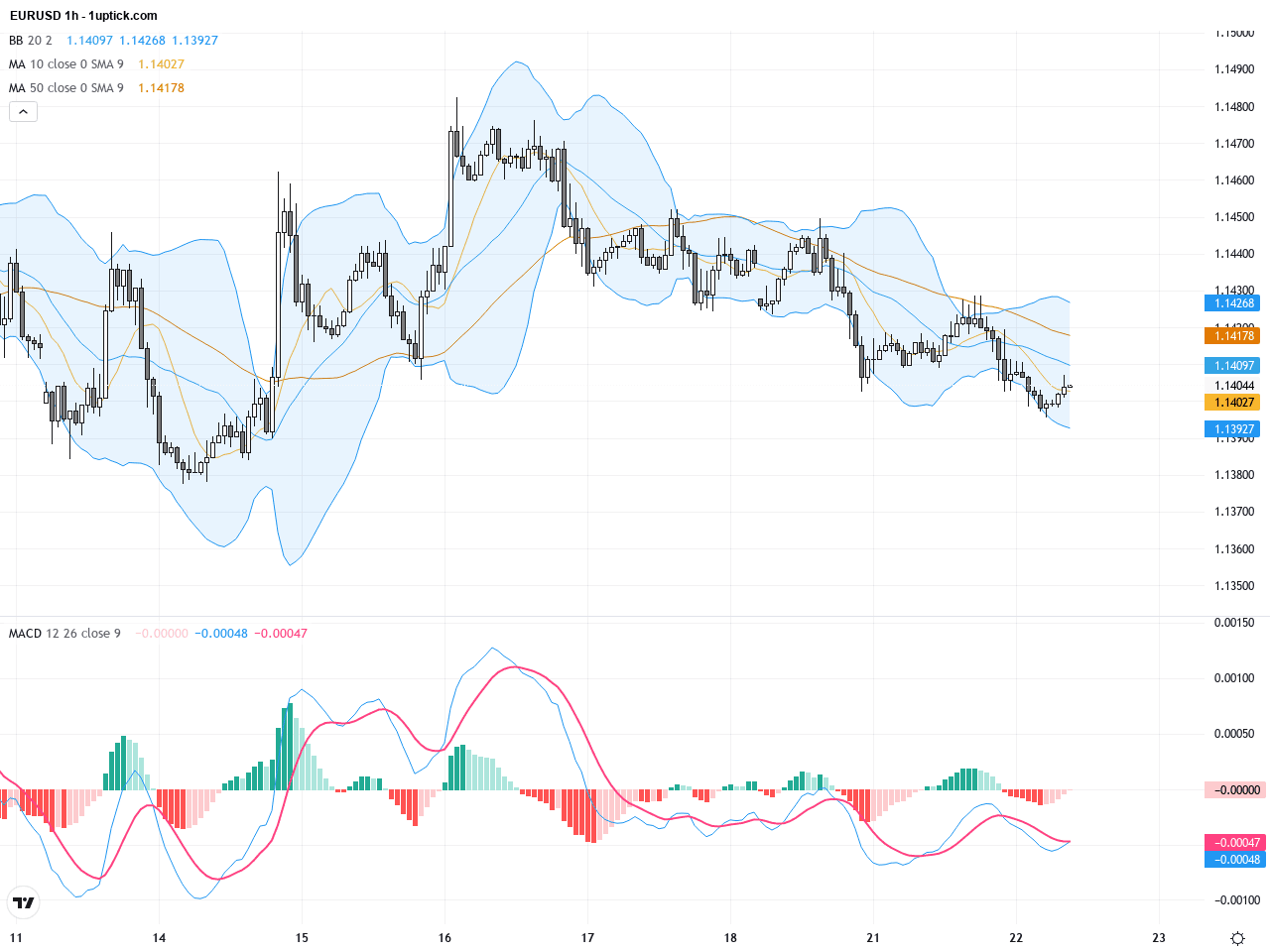
Examining the hourly chart over the past five days, EURUSD has retraced from about 1.1440 down to around 1.1380. The price moves along the lower band of the Bollinger Bands, with the MACD generating a bearish crossover indicating selling pressure. Recent bullish engulfing candlesticks suggest a possible short-term rebound if sustained, but the immediate trend remains bearish and volatile. Traders should watch closely for tests of the short-term support levels.
Technical Trend: The current EURUSD trend is cautiously bearish, showing pressure across short, medium, and long-term frames; overall trend labeled as “Cautiously Bearish.”
Technical insights highlight a clear bearish MACD trend and support forming near the lower Bollinger Band around 1.1370. While a head and shoulders pattern has yet to complete on the daily chart, price action near neckline support is crucial. The hourly chart’s recent bearish engulfing candle suggests continued short-term downside risk. Investors should watch for the impact of the ECB rate decision and the strength of dollar safe-haven flows on next moves.Today’s GMT+1 economic calendar data reveals strong Japanese export and import figures exceeding forecasts, which favors JPY but have limited direct impact on EURUSD. The UK will release multiple inflation-related indicators at 08:00, which are not directly tied to the Euro but could influence risk sentiment. No major US data is scheduled today. Overall, there are no significant economic events today expected to directly affect EURUSD’s price, but ongoing geopolitical risks remain the dominant factor.
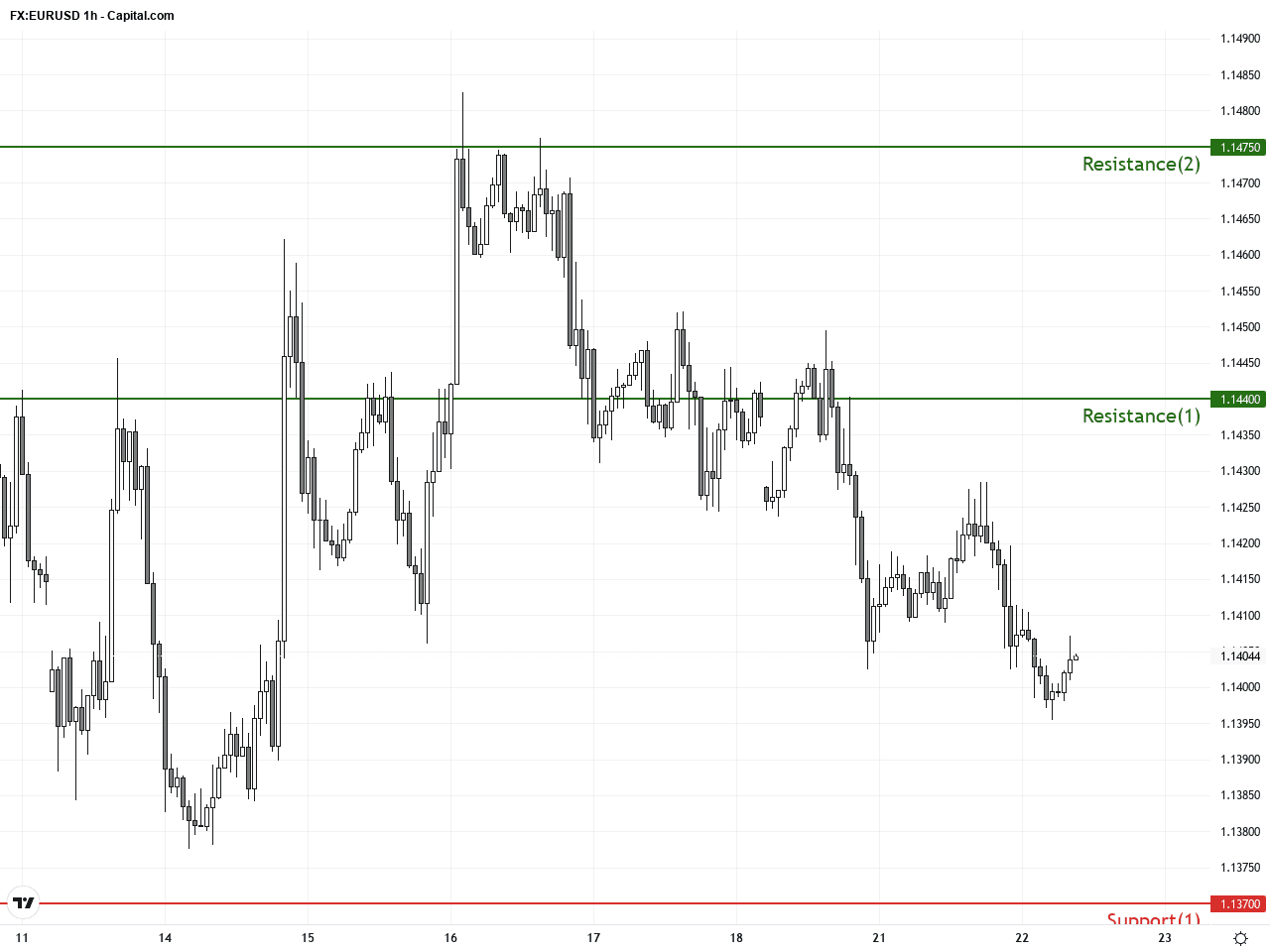
Resistance & Support
The above financial market data, quotes, charts, statistics, exchange rates, news, research, analysis, buy or sell ratings, financial education, and other information are for reference only. Before making any trades based on this information, you should consult independent professional advice to verify pricing data or obtain more detailed market information. 1uptick.com should not be regarded as soliciting any subscriber or visitor to execute any trade. You are solely responsible for all of your own trading decisions.