






 |
| Gold V.1.3.1 signal Telegram Channel (English) |
How to Construct an Oil, Gold, and Copper Supply Shock Trading Framework Using Inventories, Macro Surprises, and Breakout Confirmation
2026-07-03 @ 00:06
Building a Professional Supply Shock Trading Framework for Key Commodities
Supply shocks represent some of the most profitable trading opportunities in commodities markets. When inventory levels deviate significantly from expectations, combined with macroeconomic surprises and confirmed technical breakouts, traders can position themselves for substantial moves in oil, gold, and copper. This comprehensive guide provides a systematic approach to constructing a robust trading framework that institutional traders and sophisticated investors can implement immediately.
step_num: 1, heading: Establish Your Inventory Monitoring System, content: Begin by setting up a comprehensive inventory tracking dashboard for each commodity. For crude oil, monitor weekly EIA (Energy Information Administration) petroleum status reports, API (American Petroleum Institute) weekly statistical bulletins, and OPEC monthly oil market reports. For gold, track COMEX warehouse stocks, ETF holdings (particularly GLD and IAU), and central bank purchasing data from the World Gold Council. For copper, focus on LME (London Metal Exchange) warehouse stocks, COMEX copper inventories, and Shanghai Futures Exchange (SHFE) bonded warehouse data. Create threshold alerts when inventory changes exceed ±2 standard deviations from the 52-week moving average, as these represent potential supply shock signals.
step_num: 2, heading: Develop Macro Surprise Indicator Integration, content: Integrate macroeconomic surprise indices into your framework to contextualize inventory movements. Utilize the Citigroup Economic Surprise Index for major economies, focusing on US, China, and Eurozone readings. For oil, correlate inventory data with manufacturing PMI surprises and industrial production data. For gold, monitor inflation surprises (CPI/PPI deviations from consensus), real yield movements, and USD strength indicators. For copper, track China’s credit impulse, global construction PMIs, and electric vehicle production data. Assign a scoring system from -3 to +3 based on the magnitude and direction of surprises, where readings above +2 or below -2 signal actionable conditions when combined with inventory anomalies.
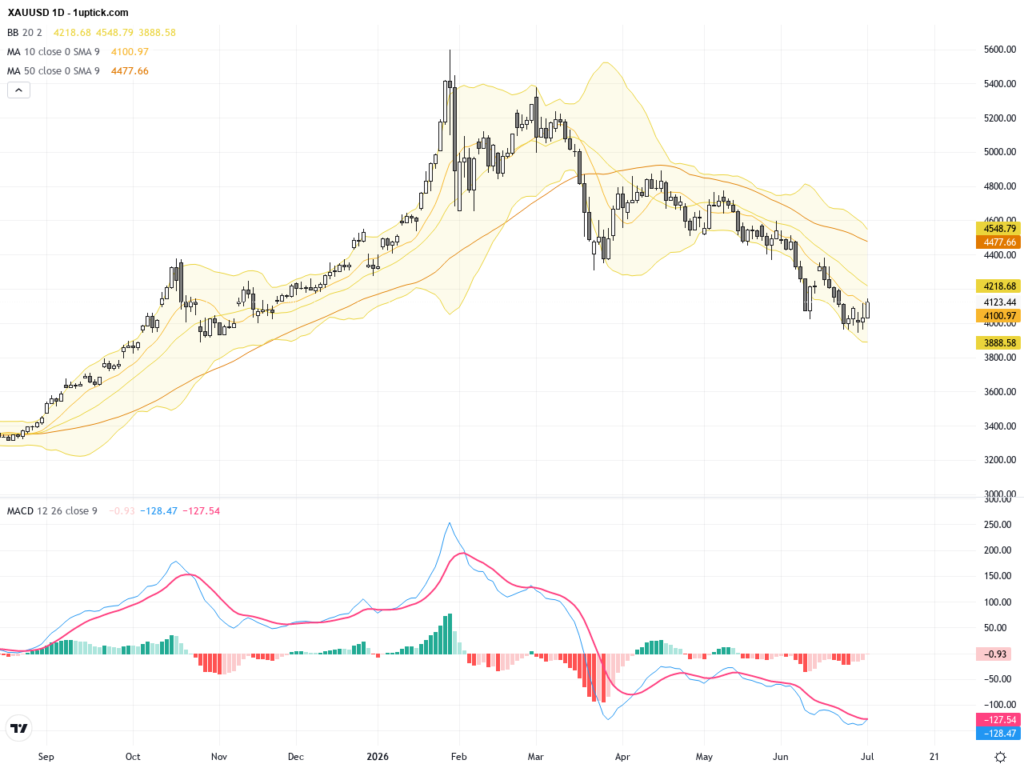
step_num: 3, heading: Configure Technical Breakout Confirmation Parameters, content: Establish precise technical criteria to confirm supply shock trades. Use multiple timeframe analysis combining daily and weekly charts. For breakout confirmation, require: (1) Price closing above/below the 20-day Bollinger Band with expanding bandwidth, (2) Volume exceeding 150% of the 20-day average, (3) RSI divergence or momentum confirmation above 60 for longs or below 40 for shorts, and (4) MACD histogram showing acceleration in the breakout direction. Additionally, identify key structural levels including previous swing highs/lows, Fibonacci extension targets, and volume profile nodes. Only execute trades when at least 3 of 4 technical criteria align with your inventory and macro signals.
step_num: 4, heading: Create the Composite Signal Scoring Matrix, content: Develop a weighted scoring system that combines all three pillars. Assign weights as follows: Inventory Signal (40%), Macro Surprise Alignment (30%), Technical Breakout Confirmation (30%). For each component, score from 0-10. Inventory scores should reflect both the magnitude of deviation and the rate of change. Macro scores should consider both the primary driver for each commodity and secondary supportive indicators. Technical scores should weight breakout strength and volume confirmation. Calculate the composite score and establish entry thresholds: scores above 7.5 warrant full position sizing, 6.0-7.5 warrant half positions, and below 6.0 require waiting for additional confirmation.
step_num: 5, heading: Implement Risk Management and Position Sizing Protocols, content: Define strict risk parameters tailored to commodity volatility profiles. For oil (WTI/Brent), limit position risk to 2% of portfolio with stops placed at 1.5x ATR (Average True Range) from entry. For gold, use 1.5% position risk with stops at 1.2x ATR given its lower volatility profile. For copper, allocate 1.5% risk with stops at 2x ATR due to its higher beta characteristics. Implement correlation-adjusted position sizing when trading multiple commodities simultaneously—reduce individual position sizes by 30% when holding correlated positions. Set maximum portfolio heat (total open risk) at 6% across all commodity positions. Use time-based stops, exiting positions that fail to move in the anticipated direction within 5 trading sessions.
step_num: 6, heading: Design Entry Execution and Scaling Strategies, content: Structure your entries to optimize execution quality. For supply shock trades, use a 3-tranche entry approach: deploy 40% of the position on initial signal confirmation, add 30% on the first pullback to the breakout level that holds, and add the final 30% on continuation confirmation. For oil trades, execute during the London-New York overlap (13:00-17:00 GMT) for optimal liquidity. For gold, consider Asian session entries when physical demand from China and India provides additional price support. For copper, align entries with LME official pricing windows. Use limit orders placed at VWAP or slight discounts during high-volatility periods rather than market orders to minimize slippage impact on overall returns.
step_num: 7, heading: Establish Exit Rules and Profit-Taking Framework, content: Create systematic exit criteria that protect profits while allowing winners to run. Implement a tiered profit-taking approach: close 25% of position at 1:1 risk-reward, another 25% at 2:1, and trail the remaining 50% using a 2x ATR trailing stop. For supply shock trades specifically, monitor for inventory normalization—begin tightening stops when inventories return within 1 standard deviation of normal levels. Set time-based profit targets: expect 60-70% of supply shock moves to complete within 15-20 trading sessions. Override technical trailing stops if macro conditions reverse sharply or if central bank policy announcements significantly alter the fundamental backdrop. Document every exit with detailed notes for post-trade analysis.
step_num: 8, heading: Build Continuous Monitoring and Adaptation Protocols, content: Establish weekly and monthly review processes to refine your framework. Weekly, analyze all open positions against updated inventory data and macro indicators, adjusting stop levels and profit targets accordingly. Monthly, conduct comprehensive performance reviews examining win rate, average risk-reward achieved, and signal accuracy by component (inventory, macro, technical). Track which commodity and signal combinations produce the highest expectancy. Quarterly, recalibrate your scoring weights based on regime changes—during high inflation periods, increase macro surprise weighting for gold; during global growth acceleration, emphasize inventory signals for copper. Maintain a detailed trading journal documenting market conditions, signal readings, and execution quality for continuous improvement.
Insider Insight: The most successful commodity supply shock traders understand that the sequencing of signals matters as much as the signals themselves. Institutional flows typically respond to inventory surprises within 24-48 hours, but full price discovery often takes 5-10 sessions as macro tourists and momentum traders join the move. Position yourself early using inventory leads, confirm with macro alignment, and scale in as technical breakouts attract broader participation. Additionally, pay close attention to the options market—unusual call or put volume in commodity ETFs often precedes significant inventory-driven moves by 1-2 sessions. Finally, remember that copper serves as a leading indicator for industrial commodities, gold acts as a macro hedge thermometer, and oil prices ultimately reflect the intersection of geopolitical risk and demand cycles. Mastering the interplay between these three commodities provides a holistic view of global economic health and trading opportunities.