








 |
| Gold V.1.3.1 signal Telegram Channel (English) |
How to Build a Comprehensive Volatility Regime Trading System for Forex and Commodities
2026-06-21 @ 00:38
Building a Comprehensive Volatility Regime Trading System for Forex and Commodities
In today’s interconnected global markets, successful traders and investors must move beyond single-asset analysis to embrace multi-dimensional regime-based frameworks. This comprehensive guide synthesizes five critical competencies: volatility regime identification, central bank policy modeling, cross-asset macro playbooks, equity-FX integration, and sophisticated carry trade hedging. By mastering these interconnected disciplines, you’ll develop a robust edge in navigating complex market environments.
Part 1: Using Volatility Regimes to Time Forex and Commodity Trades
step_num: 1, heading: Define Your Volatility Regime Framework, content: Establish clear quantitative thresholds for classifying market regimes. Use realized volatility (20-day and 60-day rolling windows), implied volatility indices (VIX, CVIX for currencies, OVX for oil), and volatility term structure (contango vs. backwardation). Create three to four distinct regimes: Low Volatility (compression), Normal Volatility, Elevated Volatility, and Crisis Volatility. Each regime should have specific entry/exit rules and position sizing parameters.
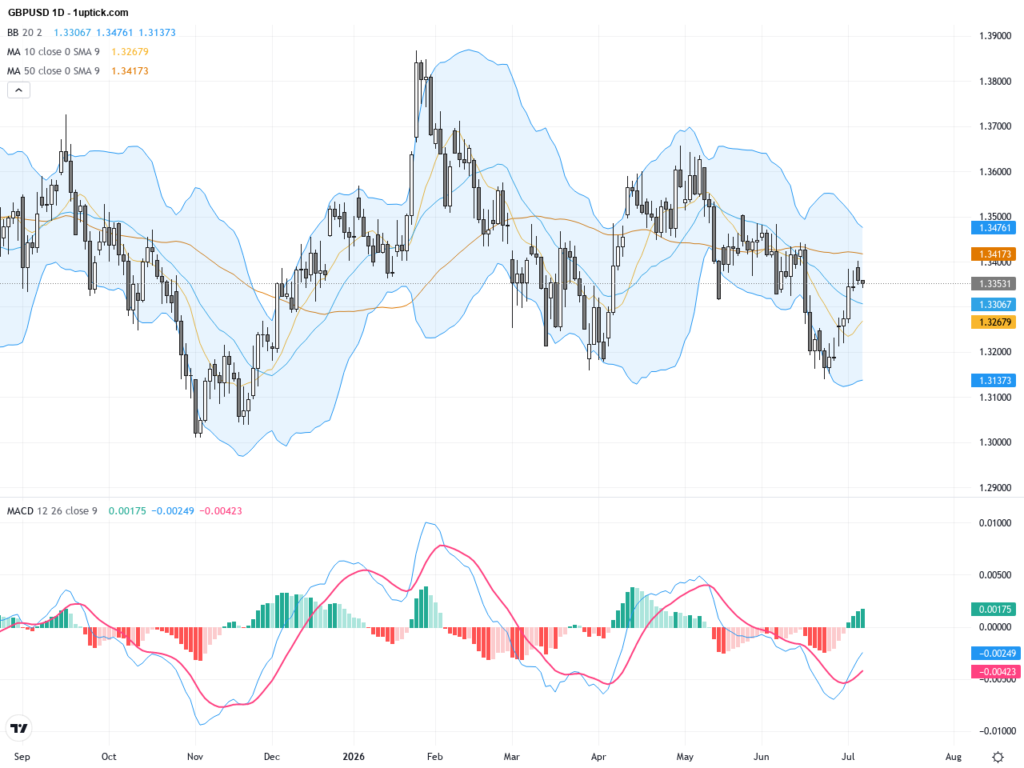
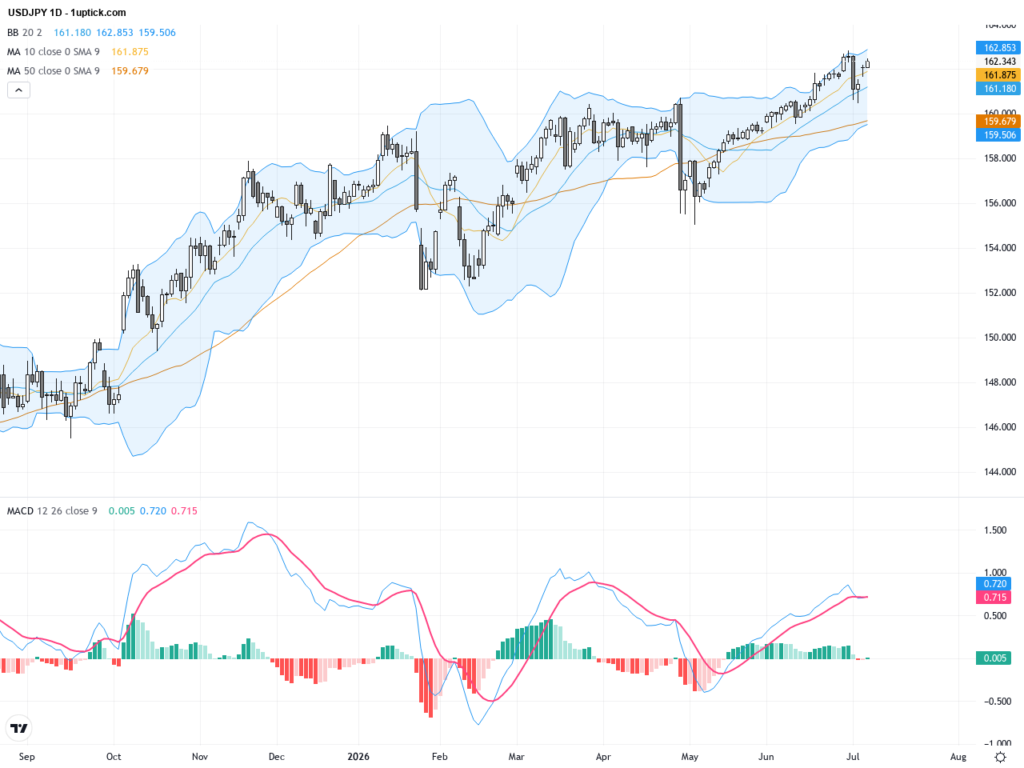
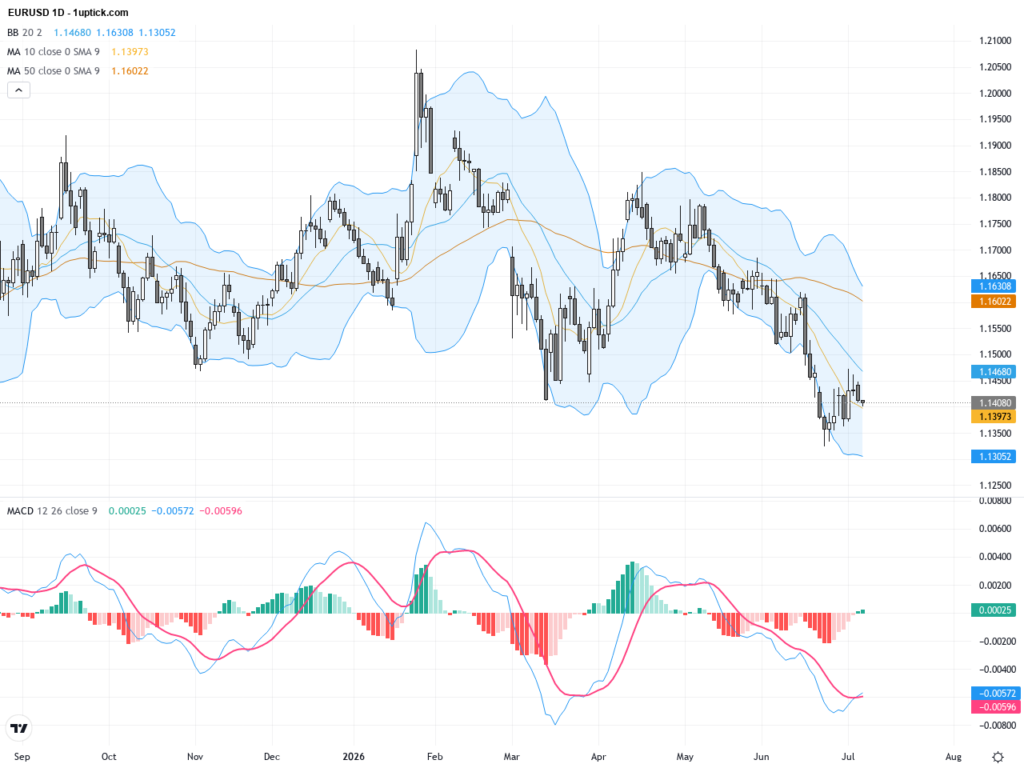
step_num: 2, heading: Build Regime Detection Indicators, content: Implement a multi-factor regime detection system combining: (a) Bollinger Band Width percentile rankings, (b) ATR ratio analysis (short-term vs. long-term), (c) Options-implied volatility percentile rankings, and (d) Cross-asset correlation matrices. Use Hidden Markov Models or simple threshold-based systems to generate regime signals. Backtest across multiple market cycles including 2008, 2015, 2020, and 2022 to validate robustness.
step_num: 3, heading: Develop Regime-Specific Trading Rules, content: In Low Volatility regimes, employ mean-reversion strategies with tighter stops and range-bound tactics. During Normal Volatility, use trend-following systems with moderate position sizes. In Elevated Volatility, reduce position sizes by 50%, widen stops, and focus on momentum breakouts. During Crisis Volatility, shift to defensive positioning, increase cash allocation, and consider volatility-selling strategies only after VIX term structure normalizes.
Part 2: Building a Central Bank-Driven Trading Regime Model
step_num: 4, heading: Map the Central Bank Policy Cycle, content: Create a systematic framework tracking the policy stance of major central banks (Fed, ECB, BOJ, BOE, PBOC, RBA). Classify each bank’s regime as: Hawkish Tightening, Neutral, Dovish Easing, or Crisis Intervention. Monitor key inputs including forward guidance language, dot plots, balance sheet trajectory, and real interest rate differentials. Maintain a central bank divergence index to identify high-conviction FX opportunities.
step_num: 5, heading: Integrate Policy Surprise Indicators, content: Build a real-time policy surprise tracker using: (a) Fed Funds futures-implied probabilities vs. actual decisions, (b) Economic surprise indices by region, (c) Central bank communication sentiment analysis, and (d) Inflation expectation divergence (breakevens vs. surveys). Policy surprises create the highest-conviction trading setups; position for asymmetric outcomes around key meetings.
step_num: 6, heading: Construct the Trading Signal Matrix, content: Develop a scoring system that combines policy stance, surprise potential, and market positioning. Assign +2 to -2 scores for each factor. When aggregate scores exceed +4 or fall below -4, initiate directional FX positions aligned with policy divergence. Focus on G10 pairs with maximum policy divergence (e.g., long currencies with hawkish central banks vs. short currencies with dovish central banks).
Part 3: Designing a Cross-Asset Macro Regime Playbook
step_num: 7, heading: Define Macro Regime Categories, content: Establish four core macro regimes based on growth and inflation dynamics: (a) Goldilocks (above-trend growth, below-target inflation) – risk-on, long equities, short volatility, carry trades; (b) Reflation (accelerating growth, rising inflation) – long commodities, short duration, commodity currencies; (c) Stagflation (slowing growth, persistent inflation) – long gold, defensive FX, short credit; (d) Deflation (contracting growth, falling inflation) – long duration, safe-haven FX, short commodities.
step_num: 8, heading: Build Leading Indicator Dashboards, content: Create regime identification dashboards using: PMI momentum and breadth, yield curve dynamics (2s10s, 3m10y), credit spreads (IG and HY), copper/gold ratio, lumber/gold ratio, and TIPS breakeven trends. Weight leading indicators higher than coincident data. Update regime probabilities weekly and maintain a 4-week confirmation period before full regime transition.
step_num: 9, heading: Develop Asset Allocation Rules by Regime, content: Create explicit allocation matrices for each regime: In Goldilocks, allocate 60% risk assets, 25% carry, 15% hedges. In Reflation, allocate 40% commodities, 30% commodity FX, 20% equities, 10% inflation hedges. In Stagflation, allocate 40% gold/real assets, 30% defensive FX, 20% cash, 10% tactical shorts. In Deflation, allocate 50% duration, 30% safe-haven FX, 20% quality equities. Transition allocations gradually over 2-4 weeks.
Part 4: Integrating Equity Index Futures and FX in a Volatility Strategy
step_num: 10, heading: Map Cross-Asset Volatility Relationships, content: Analyze the historical relationship between VIX, currency volatility (CVIX), and individual FX pair implied volatilities. Identify regime-dependent correlations: during risk-off episodes, VIX spikes typically precede JPY and CHF strength by 1-3 days. Build a cross-asset volatility impulse response model to capture lead-lag relationships. Monitor VIX term structure for early warning signals.
step_num: 11, heading: Design Integrated Trading Signals, content: Create composite signals combining: (a) VIX/VIX3M ratio for equity volatility regime, (b) 25-delta risk reversal skews for FX directional bias, (c) Cross-asset correlation breakdowns as regime change indicators, and (d) Options market positioning via CFTC data. When VIX/VIX3M inverts (>1.0) and FX risk reversals show extreme skew, position for volatility expansion and safe-haven currency strength.
step_num: 12, heading: Implement Dynamic Hedging Protocols, content: Use equity index futures (ES, NQ) as dynamic hedges for FX carry portfolios. Calculate beta-adjusted hedge ratios based on rolling 60-day correlations. During low VIX environments (<15), maintain minimal hedges (10-20% of notional). As VIX rises above 20, increase hedge ratios to 40-60%. Above VIX 30, consider full hedges or net short equity exposure to offset carry trade drawdowns.
Part 5: Hedging Carry Trades with Equity and Commodity Volatility
step_num: 13, heading: Quantify Carry Trade Risk Exposures, content: Decompose carry trade returns into: (a) interest rate differential capture, (b) spot FX movement, and (c) volatility regime sensitivity. Calculate historical drawdowns during volatility spikes (2008, 2015, 2020). Identify that carry trades exhibit negative convexity—steady gains punctuated by sharp drawdowns. Quantify the correlation between VIX spikes and carry trade losses (typically -0.6 to -0.8 during stress periods).
step_num: 14, heading: Structure Volatility-Based Hedges, content: Implement a three-tier hedging framework: Tier 1 (always-on): Maintain 5-10% of carry portfolio value in VIX call spreads (e.g., 20/30 strikes, 30-60 DTE). Tier 2 (conditional): Add long VIX futures positions when VIX term structure flattens. Tier 3 (tactical): Purchase OTM puts on commodity currencies (AUD, NZD, CAD) when copper/gold ratio deteriorates. Roll hedges monthly to maintain consistent protection.
step_num: 15, heading: Incorporate Commodity Volatility Hedges, content: Use OVX (oil volatility) and GVZ (gold volatility) as supplementary hedge instruments. Long gold positions or GVZ calls provide effective hedges for carry trades due to gold’s safe-haven characteristics. During commodity supercycle phases, use commodity volatility ETFs as portfolio insurance. Allocate 3-5% of portfolio to commodity volatility strategies during elevated macro uncertainty.
step_num: 16, heading: Backtest and Optimize Hedge Ratios, content: Conduct rigorous backtesting across multiple volatility regimes to optimize hedge ratios. Target a hedge efficiency ratio (drawdown reduction / hedge cost) above 3.0. Use Monte Carlo simulations to stress-test hedge performance under tail scenarios. Adjust hedge allocations quarterly based on changing correlation structures and regime probabilities.
Insider Insights from Experienced Practitioners:
1. Regime transitions matter more than regime identification—the most profitable opportunities occur during regime shifts, not within stable regimes. Focus 70% of analytical effort on detecting early transition signals.
2. Central bank forward guidance has diminished predictive power—market participants have become sophisticated at pricing policy paths. Focus on identifying scenarios where markets are mispricing tail risks, particularly around inflation persistence and financial stability concerns.
3. Correlation breakdowns are features, not bugs—cross-asset correlations are highly regime-dependent. The most dangerous assumption is that historical correlations will persist during stress periods. Build hedging frameworks that assume correlation convergence toward 1.0 during crises.
4. Carry trade hedging is about survival, not optimization—the goal is to preserve capital during the 2-3 annual episodes when carry trades face severe drawdowns. Accept hedge drag during calm periods as insurance premium.
5. Liquidity regime is the meta-regime—all volatility, central bank, and macro regimes ultimately depend on global liquidity conditions. Monitor Fed balance sheet, global M2, and TGA balances as the foundational layer of any regime framework.