



 |
| Gold V.1.3.1 signal Telegram Channel (English) |
A digital iron curtain is threatening the global economy ft.com

Amid geopolitical barriers that risk slowing progress and trade, Europe can become a trusted connector
Source: ft.com
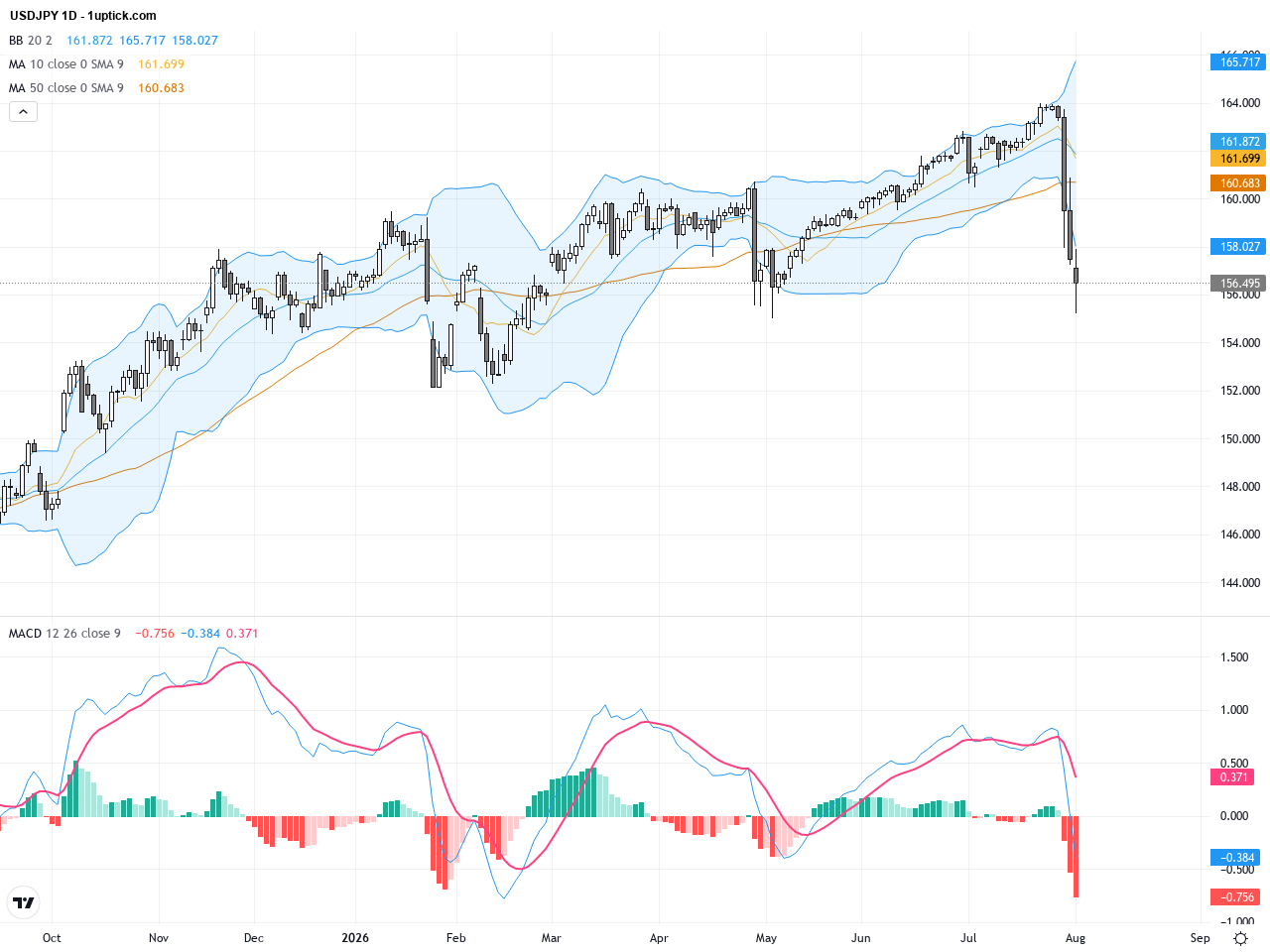
Japan and US confirm rare joint intervention to prop up yen aljazeera.com

US President Donald Trump says helping to bolster the Japanese currency is a sign of friendship.
Source: aljazeera.com
Editorial | Politburo meeting signals cautious confidence in China’s economy scmp.com
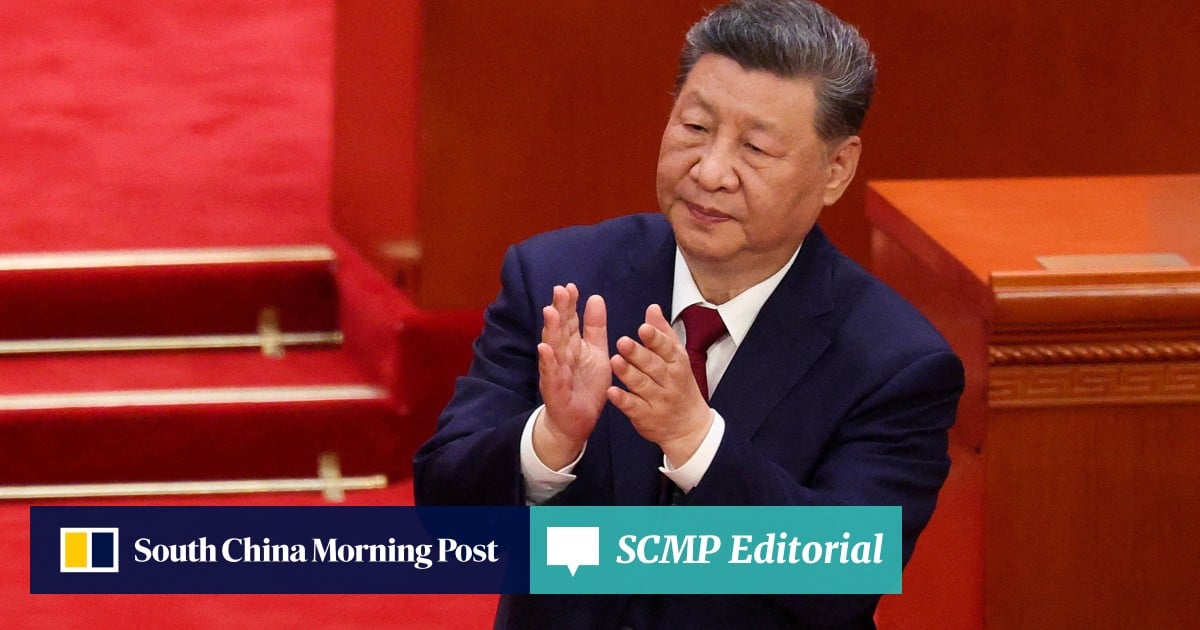
Beijing’s emphasis on hi-tech self-sufficiency and balanced trade also provides a clear road map for the Hong Kong government.
Source: scmp.com
Polling suggests economy is top issue on voters’ minds foxnews.com

Calamos Investments president and CEO John Koudounis joins ‘Fox News Live’ to discuss the slowing economy ahead of midterm elections.
Source: foxnews.com
China draws ‘red lines’ around its economic model ahead of EU, US trade talks reuters.com

China is energetically defending its economic policy mix that favours advanced industries over consumption, adopting a posture analysts see as demonstrating increasing confidence ahead of looming trade talks with Europe and the United States.
Source: reuters.com
What will Kevin Warsh do if America’s economy breaks? economist.com

An enigmatic Fed faces the risk of AI stocks falling and the oil price soaring
Source: economist.com
Khanna argues economic concerns driving far-left primary victories thehill.com

Rep. Ro Khanna (D-Calif.) said Sunday that Americans’ economic concerns are driving the string of far-left victories in House Democratic primaries. “People are upset at an unfair political and econ…
Source: thehill.com
Geoeconomics, Part I: Ranking Economic Superpowers paulkrugman.substack.com

Economists have spent the past two centuries trying to explain that global economics is a positive-sum game. That is, my nation’s success needn’t come at your nation’s expense. In fact, a country’s economy usually (though not always) benefits from economic growth in other countries because growth abroad leads to an expansion of a country’s export markets and makes better, cheaper imports available.
However, this sunny view is based on the assumption that we care about economic prosperity, not national power. True, disregarding questions of national power made sense for about 70 years after World War 2. During those years the Pax Americana created ground rules under which wars of conquest, economic blackmail and coercion, and other direct international power plays were mostly ruled out. National ambitions were focused on raising living standards. “To get rich is glorious,” declared Deng Xiaoping.
That was then. Now there is a bloody war of attrition on Europe’s eastern flank, in which the outcome will depend in large part on which country, Russia or a Europe-aided Ukraine, can withstand the most economic punishment. Iran has weaponized its ability to close the Strait of Hormuz and threatens neighboring Gulf states. China has weaponized its dominance of rare earth production and is directly aiding Iran. And the United States, having abandoned the rules-based system it created, is using tariffs or the threat of tariffs to pressure other nations into knuckling under on multiple fronts: Donald Trump has tried to use tariffs to coerce Denmark into handing over Greenland, the EU into relaxing regulations on US tech companies, Brazil into letting Jair Bolsonaro go free, and so on.
In this newly confrontational world, interest in “geoeconomics,” the study of the ways governments can use national economic strength in pursuit of geopolitical objectives, is surging. Geoeconomics is the theme of the European Central Bank’s Annual Research Conference, being held next month, at which I’ll be giving a lecture. So I have been working on the topic, which I expect to be the subject of several primers, alternating with further work on American oligarchy.
Today’s primer will be devoted to a seemingly straightforward question: Who is the world’s leading economic power? There are three economic superpowers in today’s world: China, the United States, and the European Union. Which has the biggest economy?
Why does this matter? There isn’t a one-to-one relationship between the size of a nation’s economy and its geopolitical power. The US economy is immense compared with the Iranian economy, yet we all know how that conflict has gone.
Yet economic size is clearly an important factor in global power. Nobody imagines that Vietnam can have as much influence on world affairs as China, or Canada as much influence as the United States. The European Union, mostly acting in concert, has been able to give Ukraine enough aid to stymie Russia; Latvia, acting alone, couldn’t have done so.
Yet even answering the seemingly straightforward question of which nation has the biggest economy isn’t as simple as one might imagine. Different measures of economic size yield different results. According to some measures the U.S. is still #1. Other measures say China is far ahead. According to some measures Europe has been left far behind the U.S., but by other measures it is maintaining relative parity with America.
None of these measures is wrong in the simple sense of getting the facts incorrect. Rather, they give different answers because they measure different things. As a result, which measure one should highlight depends on one’s view of how power works in the modern world.
Today’s primer will not, however, delve into the logic of geopolitical power in today’s world. That’s for future work. Instead, today’s post is about who has the world’s biggest economy — and why different measures yield different answers.
Beyond the paywall I will address the following:
1. Comparing the three economic superpowers
2. The Europe-U.S. paradox, revisited
3. How big is the Chinese economy, really?
4. Dueling pictures of economic power
Source: paulkrugman.substack.com
Rubio’s bypass plan: Can the world escape the Strait of Hormuz chokepoint? aljazeera.com

Source: aljazeera.com
Republicans Rate Trump Higher on Immigration Than on the Economy or Iran, AP-NORC Poll Finds usnews.com

WASHINGTON (AP) — Immigration remains a stronger issue for President Donald Trump than the economy or Iran, according to a new AP-NORC poll, even after three people were killed in encounters with Immigration and Customs Enforcement in the span of under a week in July. Trump is not getting a glowing …
Source: usnews.com
Republicans rate Trump higher on immigration than on the economy or Iran, AP-NORC poll finds seattletimes.com
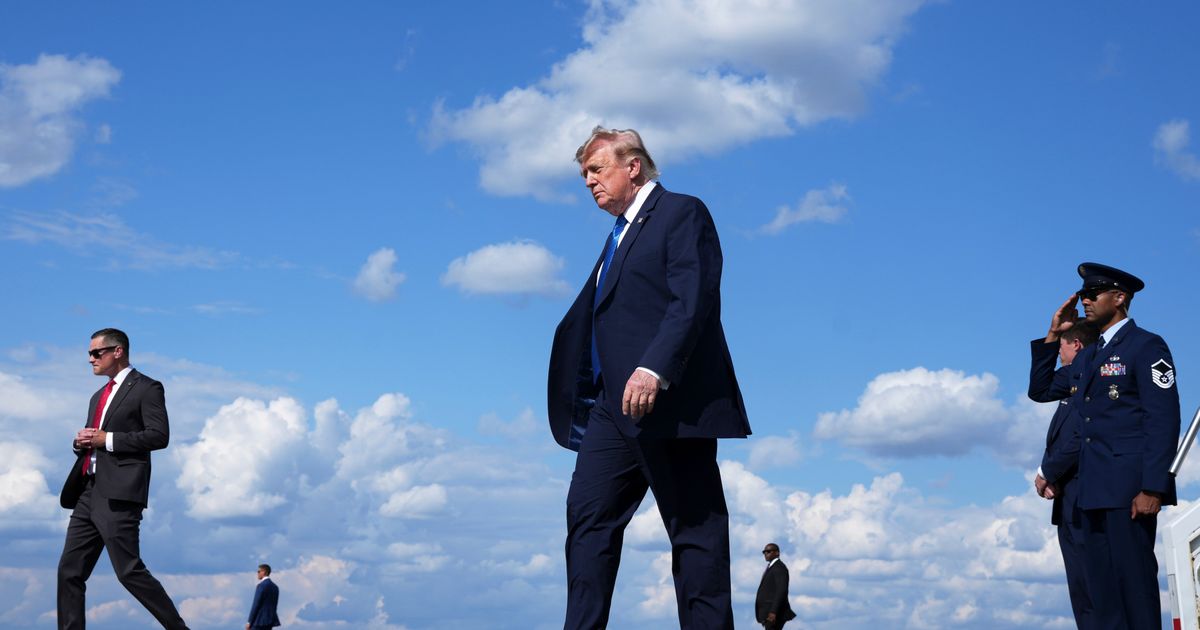
A new AP-NORC poll finds that immigration remains a relative strength for President Donald Trump, even after three people were killed in encounters with Immigration and Customs Enforcement in the span of under a week in July.
Source: seattletimes.com
Foreign workers are a growth engine for Israel’s economy jpost.com

Since October 7, Israel has been forced to confront one of the most severe labor shortages in its history. In the construction sector alone, tens of thousands of workers disappeared almost overnight.
Source: jpost.com
Trump’s promise of an economic ‘golden age’ collides with reality ms.now

It’s not a recession, at least for now. But the president has delivered the Meh Economy.
Source: ms.now
For the third time in history, women outnumber men in the workforce as the stay-at-home boyfriend becomes an economic trend fortune.com

Women now hold more jobs than men in America, for the third time ever. A Federal Reserve economist says this time, it’s not reversing.
Source: fortune.com
Record Vaca Muerta Output Fails to Lift Argentina’s Wider Economy oilprice.com
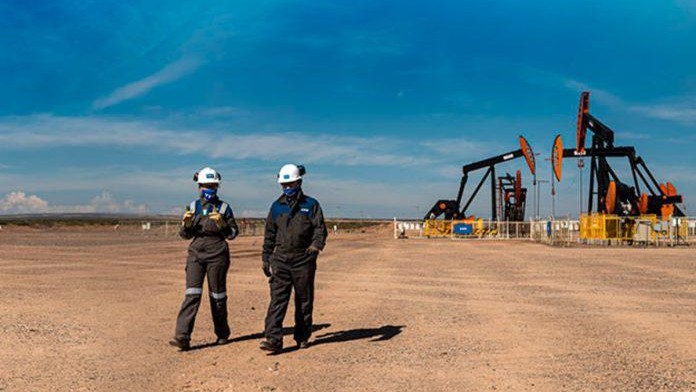
The boom remains largely confined to Neuquén province, while much of Argentina continues to struggle with weak growth, high inflation, and declining consumer spending.
Source: oilprice.com